Slow Down and Move Over for Tow Drivers Too!

Imagine working in an industry that makes the “Deadliest Catch” fishing industry seem like a cruise ship vacation. If you’re reading this, chances are good you already do. As a tow driver you work in an industry where you’re practically invisible - until it’s almost too late. In some states, you’re also invisible to the law telling people to slow down and move over when passing an incident or emergency on the highway. Even though tow drivers, like emergency workers, suffer more than twice the average occupational injury and fatality rates compared to all other industries, some states don’t require drivers to slow down and move over for a tow driver. More on that problem below.

Tow driver’s fatalities, injuries and near misses on our highways happen far too often. Ask any driver and you’ll hear a story that will raise the hair on the back of your neck, quickly followed by a knowing head shake and probably an explicative. In some cases, it’s a miracle they survived to tell the tale. Some didn’t.

With the exceptions of Hawai’i and the District of Columbia, 49 States now have the “Slow Down Move Over” law in place, but we still lose not only law enforcement officers and emergency responders, but tow drivers and civilians on an almost daily basis. Why? According to a national poll by Mason Dixon Polling & Research, sponsored by the National Safety Commission, 71 percent of Americans have never heard of “Move Over” laws. Not knowing about the laws also means those same people likely don’t know the proper procedure when passing an incident/emergency scene. Quite simply, if you’re in a lane beside the incident, slow down first, and then attempt to move over - if it’s safe to do so. In that order.  If you can only slow down, do so. Other reasons for these senseless deaths include drunken driving, texting, daydreaming, and simple inattention to surroundings when passing an incident.

Even though tow drivers are usually on the receiving end of motorist thoughtlessness, it’s also important to remember that we drive these same roads as a civilian ourselves. While practicing very safe operating procedures when working, they’re often forgotten while out in our non-working lives.  Far too many times I've been a passenger in the car with someone who should know about the law (read: driving professional), and yet I see little, if any, effort to slow down and move over when they pass an incident. While no official statistics on the deaths of tow drivers specifically, industry estimates range from 50 to 70 tow drivers killed on an annual basis. A simple internet search returns dismaying examples just over the last year:

o   Jun 30, 2013 - A local tow truck operator was killed while he was in the process of towing a vehicle on Interstate ten.
o   Jun 11, 2013 - KUSA - A man was killed Tuesday afternoon when he was hit by a semi truck as he was attempting to tow a vehicle.
o   May 4, 2013 - MIAMI (CBS Miami) - A tow truck driver assisting a car was hit and killed by a third vehicle that fled the scene.
o   Feb 12, 2013 - MALIBU, Calif. (KTLA) -- A tow truck driver was killed in Malibu Monday night
o   Aug  28, 2012 - An 18-year-old Smithville, MO, tow truck driver was struck and killed while out of his vehicle on Interstate 35 near the Christopher S. Bond Bridge.
o   Dec 9, 2012 - A tow-truck driver helping a stranded motorist along the 405 Freeway in Long Beach was killed early Sunday after he was struck by a drunk driver.
o   COLTON, California – J&S Towing truck driver Jesus Salcedo, 56, of Colton was struck and killed late Friday afternoon while assisting the driver disabled vehicle

Unlike  police, fire and rescue, which are protected by the slow down move over law, tow drivers aren’t covered by these laws in all states. So, which states don’t protect tow drivers with laws when they’re the only ones at the incident? Surprisingly, there are nine: 

·         Alaska
·         Louisiana
·         Maryland
·         New Mexico
·         New York
·         North Dakota
·         South Dakota
·         Texas
·         Wyoming

Working an incident is always a fluid situation. While you always have to have one eye on traffic and another on the job at hand, the states above make it even more difficult for tow drivers to come home at night. If you live in one of these states, speak with your legislator. 

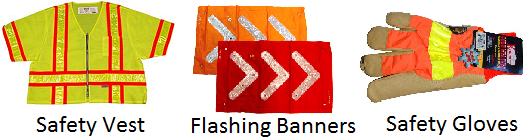
So, how do you protect yourself while you’re out on the road? Three words. High visibility equipment. Your lights, work clothes and temporary traffic control equipment should all be high visibility; the brighter the better. Don’t work on the traffic side of the incident, if possible. While this isn’t always possible, this is the reason you want to have high visibility equipment.  Your movement, because noticing activity is a function built into our brains, combined with the bright clothing creates better visibility for other drivers.  

If you know of a safer way we can work, don't hesitate to contact us.

Sean Dewey
East Coast Truck and Trailer Sales, Inc

WWW.ECTTS.Com  1-800-849-2178
The highway safety equipment you need can be found at any of the links below: 


WWW.ECTTS.COM Highway Safety Equipment

It's Inspection Time!

The Inspections Are Coming Soon!
Be prepared on from June 4th to June 6th
Click HERE to go to the inspection checklist
 to make sure you can pass

========================================================

carhauler parts
****NOTE PRICING ON HEIGHT STICK IS $115.00****

2 More Trucking Scam(s)....


Here is a special treat. I don't just have one scam to report but TWO! This is in addition to the last two that I have mentioned on various blogs.

Driver Training Scam


Yet another scam has made it to the trucking and transportation industry. On top of crooks trying to steal your cargo, your financial information and  your vehicles now they are targeting your potential recruits.

A group of con artists has a confidence scam designed to pilfer potential drivers who are seeking training. Click the picture to see a larger version of the letter


http://www.fmcsa.dot.gov/documents/alerts/Hiring-Fraud-on-Drivers%20-Driving-Schools.pdf

Trucking Company Payroll Scam

Here is another scam to look out for. According to the Upper Macungie Patch (Pennsylvania Newspaper) a trucking company was scammed out of over $50,000. The criminals had
fake names on the companies payroll which was engineered through the payroll company that services the trucking company. 

This is a new one and a painful lesson. Do not assume that criminals have to be outsiders. They can be criminals in organizations that have dealings with yours. The access they have to information can make them just as dangerous as those in your organization.

Remember watch where your information goes and where it comes from...crooks certainly are. 

  http://uppermacungie.patch.com/articles/54k-payroll-fraud-reported-by-trucking-company

=======================================================================


The Issue Of Driver Health Continues To Grow...


I read of a San Antonio driver who was fired because he could not do group exercises. The man did not appear to be overweight or have a poor record as a truck driver. I am not sure if this was the only cause of the termination. What I am sure about is that things like driver health are a factor.

driver health, #driver #health
The cost of insurance. The increased risk of being overweight and other health indicators will greatly shape the landscape of tommorrows trucker and truck company. A profession, like trucking, where medical records are fair game will put more pressure to find healthy people to employ.

The real question is where does it stop. Will companies become ever more discriminatory to drivers who reach a certain age. Will one health hiccup reduce the amount of work a driver can get in a computerized human resource system where insurance and health care costs are as a big a finaincial factor as being a good driver.

I do not know how it will play out. The standards needed to be a driver are becoming more and more stringent and are being shaped by a host of government regulations and medical red tape. I would bet that tommorrow's trucker will be very healthy for the reasons I have given.

An unexpected consequence is that the best drivers may not be behind trucks. What we may get is a work force of average drivers in good health. This may or may not be good. Yes, the company is making more money. But will these drivers stay in their positions or will a wave of turnover create a healthy but marginal driving force.

Again, I do not really know. I am just posing the question that the health requirements should not become all consuming as to the point where a healthy competent driver loses his or her job. As in the case of the San Antonio driver, we lost another driver in a field where we simply cannot afford to lose good professionals.

Food for thought...

A reminder to avoid fines


#Unified#Carrier#Registration#documentation is required in your truck, carhauler, etc on or after February 1st, 2013.   

 The #Commercial #Vehicle #Safety #Alliance #(CVSA) will begin enforcement on February 1st,2013.  

 Inspectors are authorized to inspect a number of different documents to verify compliance. 

Make sure your drivers have these documents ready and accessible:


  • Log entries
  • Toll receipts
  • Bills of Lading
  • Shipping papers 
  
CVSA to Start Enforcement of UCR Compliance Feb. 1: (Jan 25,2013) http://www.ttnews.com/articles/basetemplate.aspx?storyid=31092&t=CVSA-to-Start-Enforcement-of-UCR-Compliance-Feb-1

======================================================================================

============================================================

#truck #repair#When In The #Port of #Virginia

Come visit #ECTTS for #repair or #maintenance

#truck #welding
#roadside #repair

Some Clues To Driver Retention


I started reading a Roadking article about the perils of a rookie#driver. I started reading it expecting a feel good personal interest story but got something more. Here is what I found.
Some of the clues to a#successful#retention#program are hidden, not just in what is being said in article, but who gets involved on the topic of young drivers.

Accordingly, tips were given in the article to new drivers from experienced drivers who remember how it felt to be a rookie. On top of that, additional comments by experienced #drivers were posted in the comments section beneath the article.

So where am I going with this?

Well..a few thoughts:


The treatment of the#older#drivers can make or break you since THEY will determine the global opinions of your younger drivers. Treat them the way a pro team treats a star athlete, with patient concern, training, and constant rewards.

Start a#mentoring program with reward incentives for experienced drivers to work with new recruits. If a young driver stays so many months, maybe reward the senior mentor driver with a restaurant gift card or comfort item for their truck.
 
Make sure the rewards are set up at#different time increments to continue incentivizing the older drivers to mentor the younger drivers.

Constantly, regularly listen to#experienced#drivers and document what they face as well as what rookie drivers face. Compile this into training materials so there are no surprises on the road which could discourage newer drivers.

Read the article I am referencing, while a few weeks old, it is still pretty good. Click here to go to it.


 -Michael Saks


#Trucking /#transportation topics editor


“The Rookie: A new driver looks back at his first year on the road” (December 31st,2012) http://roadking.com/2012/12/the-rookie/

=========================================================

Compact Extra Loud Chrome #Train Horn - 4 #Bell


Enhanced by Zemanta