ECTTS.Com

Make an Additional $50,000.00 a Year From Your Rig!

Everyone wants to make more money at their job, but very few people have the opportunity to give themselves a $50,000.00 raise per year. You, as an owner/operator of a tractor trailer, have that opportunity. You’ve probably heard any number of these recommendations before, but we’ve put them all together - and done the math. If you want results, some bad habits need to be broken and some equipment needs to be installed. Let’s start with 5 realistic ways you can make much more money with your rig.

Stop Idling!

You and I both know drivers that have bad habits. First, there’s idling.  Of the 24 hours available, 11 are over the road and the other 13 are consumed idling – usually just for convenience. While there are any number of reasons to reduce idling as much as possible, including laws in some states, consider this:

·         Idling reduces the useful lifetime of your oil. You have a standard lifetime of around 600 hours of operation for over-the-road driving with each oil change. Continuous idling can reduce that to a mere 150 hours! How much are you paying for a standard oil change? How often do you want to be paying for one?  Idling at around 625 RPMs allows for buildup of unburned fuel on the cylinder liners, which is drawn in by the oil sump. This contaminates the oil and shortens the life of the fluid as a lubricant. You’re now paying for more oil changes, more fuel and more engine maintenance; this is your money lost. Even if you choose a higher idling rate to combat some of the oil contamination, you’re now using even more fuel to idle, and you’re still paying more for maintenance, so your costs are still piling up.

·         You’re not making money from your fuel if you’re idling.  Drivers want to drive. That’s how money is made, but there are mandatory down times. What your truck is doing while on that down time is where your money is going; especially since a one-man driver is on downtime more than driving time every single day. Some drivers think of it as a necessary evil, and create the most comfortable environment possible while burning up to a gallon of diesel an hour. That’s almost $50.00 per day in fuel that’s not making you money. Multiply that by the average truck work year, and that’s around $14,000.00. Stop idling unless absolutely necessary and you start making more money.  


·         So, what do you do about it? Install a small generator that runs from your fuel tank, or a separate tank. You can have a very comfortable cab, as well as run your electrics from a small, very efficient generator. There are also electric plug-ins available at numerous truck stops and rest areas, so drivers can be comfortable in any weather, and the heaters can keep the fluids at start-up temp. It actually takes about 14 hours for an engine and fluids to cool to ambient temperature once the rig is shut down, depending on the outside temperature, so worrying about a cold start usually isn’t the problem. There are a host of other solutions out there as well, from solar, to AC battery solutions that will reduce your idling time significantly.

Break Bad Habits!

Ride with enough drivers and you’ll know most seem to have one or two major fuel wasting habits. The first one is almost always their speed. Yes, the load has to be there on time, and drivers want to get the most miles out of their 11 hours, but what if you knew for a fact that dropping your speed from 75 mph to 65 mph would make you $18,000.00 more per year in fuel savings? That’s right; by dropping an average of 10 mph, drivers can gain as much as 1 additional mpg. The difference between the maximum fuel economy RPM and the maximum horsepower RPM range can be as small as 200 RPM. Find out the range for your truck, and take advantage of it. If your average is 6 mpg, plug in 7 mpg to your yearly fuel usage, and see how much more you can make with your truck/fleet just by slowing it down some.

Another bad habit is running out of the top gear.  If you are in the top gear less than 90% of the time, you’re paying for it. Poor shifting habits make for huge losses in fuel. Ten percent less time in the top gear translates into 0.5% mpg losses. And, of course, there’s sudden stopping and fast acceleration to make matters worse. How bad is it? There’s a 30% loss of fuel mileage associated with poor driving habits when a driver exhibits all bad habits at once. Let’s see how that translates into what you could be making. Using our average mileage for an OTR rig of about 6 MPG, with a 30% loss for poor driving, that makes it in the neighborhood of 4.8 MPG. How much do you save with good driving habits? Conservatively, about $30,000.00 per year if you compare fuel usage at each of those values for one year.

You’ll notice we’re well above the $50,000.00 mark at this point, and there’s still more to come. So why am I giving you a lower estimate? Not all drivers, or all trucks, exhibit all of the same problems. Some have good driving habits, but poor idling behaviors; others, vice versa. Still more problems can be isolated to the equipment itself. Which brings us to…

Update Your Equipment!

With the exception of poorly maintained equipment, of all the things that make a truck expensive to operate, the lack of aerodynamics can be one of the worst. If your truck/fleet is still hauling without improvements in aerodynamics, you need to do a cost analysis on the return this equipment provides.

The highest estimate for updating your truck with aerodynamic equipment is that it can add up to 12% to your MPG. That takes your mileage from 6 MPG to 6.76 MPG, with a fuel savings of around $14,000.00 per year. Yes, you will spend several thousand dollars for an upgrade, but that’s a one-time investment that pays you again, and again, over the life cycle of the rig. Additionally, not every upgrade is available for every type of rig, so your results are going to vary with the amount of aerodynamics you can, or do, install. Some equipment you might want to review includes:

A Trailer Gap Reducer and Trailer Side Skirts
A Trailer Boat Tail and Trailer Side Skirts
Advanced Trailer End Fairing
Advanced Trailer Skirts
Tractor Aerodynamics  Package

Finally, there are low rolling resistance tires. These tires are already required in California on all tractors, and are a coming requirement for all trailers in that state by 2017. This sounds like bad news, but for the small additional cost of each tire, there are significant returns. Just as the shape of your truck contributes to greater resistance, so does the design of your tire. Low rolling resistance tires can improve your MPG by up to 8%. Again, taking our average rate of 6 MPG, and adding another 8% to the equation gives you around $9,000.00 per year.

If nothing else, this information should help you determine where to begin to start making more money. If we’re being realistic, each item has its own associated expense. If you’re the driver, you’ll have to spend time relearning good driving habits, determining just how much idling you actually have to do, and how much time you are going to spend in down time to do the upgrades on your rig. If you have drivers working for you, you will have training costs; upgrade costs and management expenses to continue a successful program. If you’re interested in making more money from your business, it’s worth it.

East Coast Truck and Trailer Sales
2906 Elmhurst Lane
Portsmouth, VA 23701
800-849-2178

Free T-Shirt for Truck Driver Appreciation Week

Free T-Shirt for Truck Driver Appreciation Week

In appreciation for your dedication, and hard work as a truck driver, we would like to offer you one of our T-shirts for free. These T-shirts have been a great seller on our website, but during Truck Driver Appreciation Week we're going to give you one for free.  There are a number of designs to choose from, so you're not limited to one type of shirt. We appreciate the work you do. Keep rolling, and keep safe.

Free T-Shirt from East Coast Truck & Trailer Sales

Slow Down and Move Over for Tow Drivers Too!

Imagine working in an industry that makes the “Deadliest Catch” fishing industry seem like a cruise ship vacation. If you’re reading this, chances are good you already do. As a tow driver you work in an industry where you’re practically invisible - until it’s almost too late. In some states, you’re also invisible to the law telling people to slow down and move over when passing an incident or emergency on the highway. Even though tow drivers, like emergency workers, suffer more than twice the average occupational injury and fatality rates compared to all other industries, some states don’t require drivers to slow down and move over for a tow driver. More on that problem below.

Tow driver’s fatalities, injuries and near misses on our highways happen far too often. Ask any driver and you’ll hear a story that will raise the hair on the back of your neck, quickly followed by a knowing head shake and probably an explicative. In some cases, it’s a miracle they survived to tell the tale. Some didn’t.

With the exceptions of Hawai’i and the District of Columbia, 49 States now have the “Slow Down Move Over” law in place, but we still lose not only law enforcement officers and emergency responders, but tow drivers and civilians on an almost daily basis. Why? According to a national poll by Mason Dixon Polling & Research, sponsored by the National Safety Commission, 71 percent of Americans have never heard of “Move Over” laws. Not knowing about the laws also means those same people likely don’t know the proper procedure when passing an incident/emergency scene. Quite simply, if you’re in a lane beside the incident, slow down first, and then attempt to move over - if it’s safe to do so. In that order.  If you can only slow down, do so. Other reasons for these senseless deaths include drunken driving, texting, daydreaming, and simple inattention to surroundings when passing an incident.

Even though tow drivers are usually on the receiving end of motorist thoughtlessness, it’s also important to remember that we drive these same roads as a civilian ourselves. While practicing very safe operating procedures when working, they’re often forgotten while out in our non-working lives.  Far too many times I've been a passenger in the car with someone who should know about the law (read: driving professional), and yet I see little, if any, effort to slow down and move over when they pass an incident. While no official statistics on the deaths of tow drivers specifically, industry estimates range from 50 to 70 tow drivers killed on an annual basis. A simple internet search returns dismaying examples just over the last year:

o   Jun 30, 2013 - A local tow truck operator was killed while he was in the process of towing a vehicle on Interstate ten.
o   Jun 11, 2013 - KUSA - A man was killed Tuesday afternoon when he was hit by a semi truck as he was attempting to tow a vehicle.
o   May 4, 2013 - MIAMI (CBS Miami) - A tow truck driver assisting a car was hit and killed by a third vehicle that fled the scene.
o   Feb 12, 2013 - MALIBU, Calif. (KTLA) -- A tow truck driver was killed in Malibu Monday night
o   Aug  28, 2012 - An 18-year-old Smithville, MO, tow truck driver was struck and killed while out of his vehicle on Interstate 35 near the Christopher S. Bond Bridge.
o   Dec 9, 2012 - A tow-truck driver helping a stranded motorist along the 405 Freeway in Long Beach was killed early Sunday after he was struck by a drunk driver.
o   COLTON, California – J&S Towing truck driver Jesus Salcedo, 56, of Colton was struck and killed late Friday afternoon while assisting the driver disabled vehicle

Unlike  police, fire and rescue, which are protected by the slow down move over law, tow drivers aren’t covered by these laws in all states. So, which states don’t protect tow drivers with laws when they’re the only ones at the incident? Surprisingly, there are nine: 

·         Alaska
·         Louisiana
·         Maryland
·         New Mexico
·         New York
·         North Dakota
·         South Dakota
·         Texas
·         Wyoming

Working an incident is always a fluid situation. While you always have to have one eye on traffic and another on the job at hand, the states above make it even more difficult for tow drivers to come home at night. If you live in one of these states, speak with your legislator. 

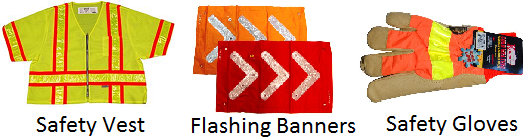
So, how do you protect yourself while you’re out on the road? Three words. High visibility equipment. Your lights, work clothes and temporary traffic control equipment should all be high visibility; the brighter the better. Don’t work on the traffic side of the incident, if possible. While this isn’t always possible, this is the reason you want to have high visibility equipment.  Your movement, because noticing activity is a function built into our brains, combined with the bright clothing creates better visibility for other drivers.  

If you know of a safer way we can work, don't hesitate to contact us.

Sean Dewey
East Coast Truck and Trailer Sales, Inc

WWW.ECTTS.Com  1-800-849-2178
The highway safety equipment you need can be found at any of the links below: 


WWW.ECTTS.COM Highway Safety Equipment

It's Inspection Time!

The Inspections Are Coming Soon!
Be prepared on from June 4th to June 6th
Click HERE to go to the inspection checklist
 to make sure you can pass

========================================================

carhauler parts
****NOTE PRICING ON HEIGHT STICK IS $115.00****

2 More Trucking Scam(s)....


Here is a special treat. I don't just have one scam to report but TWO! This is in addition to the last two that I have mentioned on various blogs.

Driver Training Scam


Yet another scam has made it to the trucking and transportation industry. On top of crooks trying to steal your cargo, your financial information and  your vehicles now they are targeting your potential recruits.

A group of con artists has a confidence scam designed to pilfer potential drivers who are seeking training. Click the picture to see a larger version of the letter


http://www.fmcsa.dot.gov/documents/alerts/Hiring-Fraud-on-Drivers%20-Driving-Schools.pdf

Trucking Company Payroll Scam

Here is another scam to look out for. According to the Upper Macungie Patch (Pennsylvania Newspaper) a trucking company was scammed out of over $50,000. The criminals had
fake names on the companies payroll which was engineered through the payroll company that services the trucking company. 

This is a new one and a painful lesson. Do not assume that criminals have to be outsiders. They can be criminals in organizations that have dealings with yours. The access they have to information can make them just as dangerous as those in your organization.

Remember watch where your information goes and where it comes from...crooks certainly are. 

  http://uppermacungie.patch.com/articles/54k-payroll-fraud-reported-by-trucking-company

=======================================================================


The Issue Of Driver Health Continues To Grow...


I read of a San Antonio driver who was fired because he could not do group exercises. The man did not appear to be overweight or have a poor record as a truck driver. I am not sure if this was the only cause of the termination. What I am sure about is that things like driver health are a factor.

driver health, #driver #health
The cost of insurance. The increased risk of being overweight and other health indicators will greatly shape the landscape of tommorrows trucker and truck company. A profession, like trucking, where medical records are fair game will put more pressure to find healthy people to employ.

The real question is where does it stop. Will companies become ever more discriminatory to drivers who reach a certain age. Will one health hiccup reduce the amount of work a driver can get in a computerized human resource system where insurance and health care costs are as a big a finaincial factor as being a good driver.

I do not know how it will play out. The standards needed to be a driver are becoming more and more stringent and are being shaped by a host of government regulations and medical red tape. I would bet that tommorrow's trucker will be very healthy for the reasons I have given.

An unexpected consequence is that the best drivers may not be behind trucks. What we may get is a work force of average drivers in good health. This may or may not be good. Yes, the company is making more money. But will these drivers stay in their positions or will a wave of turnover create a healthy but marginal driving force.

Again, I do not really know. I am just posing the question that the health requirements should not become all consuming as to the point where a healthy competent driver loses his or her job. As in the case of the San Antonio driver, we lost another driver in a field where we simply cannot afford to lose good professionals.

Food for thought...